Jury: Monsanto To Pay $2 Billion In Weed Killer Cancer Case
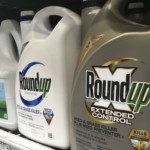
SAN FRANCISCO, C.A. — A jury on Monday ordered agribusiness giant Monsanto Co. to pay a combined $2.055 billion to a couple claiming that the company’s popular weed killer Roundup Ready caused their cancers.
The jury’s verdict is the third such courtroom loss for Monsanto in California since August, but a San Francisco law professor said it’s likely a trial judge or appellate court will significantly reduce the punitive damage award.
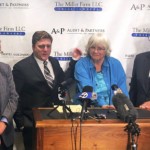
The state court jury in Oakland concluded that Monsanto’s weed killer caused the non-Hodgkin’s lymphoma Alva Pilliod and Alberta Pilliod each contracted. Jurors awarded them each $1 billion in punitive damages in addition to a combined $55 million in compensatory damages.
Alberta Pilliod, 76, said after the verdict that she and her husband, Alva, have each been battling cancer for the last nine years. She says they are unable to enjoy the same activities they participated in before their cancer diagnosis.
“It changed our lives forever,” she said. “We couldn’t do things we used to be able to do, and we really resent them for that.”
One of the Pilliods lawyers, Michael Miller, conceded that the $2 billion punitive damage award was likely to be reduced on appeal, but said they are prepared for a long legal battle.
A federal jury in San Francisco ordered the weed killer maker in March to pay a Sonoma County man $80 million. A San Francisco jury last August awarded $289 million to a former golf course greens keeper who blamed his cancer on Monsanto’s Roundup Ready herbicide. A judge later reduced the award by $200 million.
The three California trials were the first of an estimated 13,000 plaintiffs with pending lawsuits against Monsanto across the country to go to trial. St. Louis-based Monsanto is owned by the German chemical giant Bayer A.G.
Bayer said Monday that it would appeal the verdict.
“The verdict in this trial has no impact on future cases and trials, as each one has its own factual and legal circumstances,” the company said.
The company noted that none of the California verdicts has been considered by an appeals court and that the U.S. Environmental Protection Agency considers the weed killer safe.
The EPA reaffirmed its position in April, saying that the active ingredient glyphosate found in the weed killer posed “no risks of concern” for people exposed to it by any means — on farms, in yards and along roadsides, or as residue left on food crops.
“There is zero chance it will stand,” said University of California, Hastings School of Law professor David Levine. He said the ratio between the $2 billion in punitive damages and $55 million in compensatory damages is too high. He said judges rarely allow punitive damages to exceed four times actual damages awarded.
The California Supreme Court ruled in 2016 that any punitive damages exceeding 10 times the compensatory damages are likely unconstitutionally high. The court didn’t propose a ratio it felt correct, but said punitive damages should almost never exceed nine times actual damages, it said.
The punitive damages awarded Monday are 36 times the actual damages.
The lawsuits have battered Bayer’s stock since it purchased Monsanto for $63 billion last year and Bayer’s top managers are facing shareholder discontent.
Chairman Werner Wenning told shareholders at Bayer’s annual general meeting in Bonn last month that company leaders “very much regret” falls in its share price. At the same time, CEO Werner Baumann insisted that “the acquisition of Monsanto was and remains the right move for Bayer.”
Bayer’s stock price closed Monday at $15.91 a share, down 45 cents or 2.76 percent per share, in trading on the New York Stock Exchange. The verdict was announced after the trading session closed.
Bayer’s share price has lost half its value since it reached s 52-week high of $32.80 a share.