Biden To Restore 2 Utah National Monuments Cut By Trump
SALT LAKE CITY (AP) — President Joe Biden will restore two sprawling national monuments in Utah that have been at the center of a long-running public lands tug-of-war between presidential administrations, the state’s governor said Thursday.
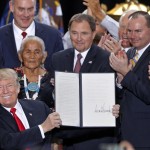
Gov. Spencer Cox, a Republican, released a statement expressing disappointment in Biden’s decision to restore Bears Ears and Grand Staircase-Escalante monuments, which were downsized significantly under President Donald Trump. Cox’s office said Interior Secretary Deb Haaland informed the governor of Biden’s decision.
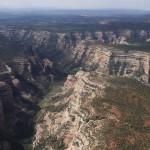
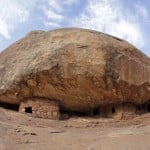
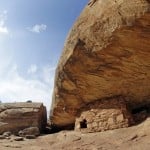
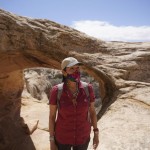
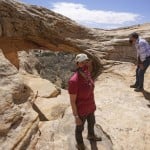
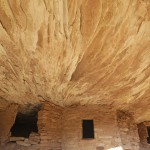
The monuments cover vast expanses of southern Utah where red rocks reveal petroglyphs and cliff dwellings and distinctive twin buttes bulge from a grassy valley. The Trump administration had cut Bears Ears, on lands considered sacred to Native American tribes, by 85% and slashed Grand Staircase-Escalante by nearly half. Both monuments were created by Democratic presidents.
The White House and the U.S. Interior Department declined to comment Thursday, but a Democratic aide said Biden’s order will also restore protections to a marine conservation area off the New England coast.
Trump had also made a rule change to allow commercial fishing at the Northeast Canyons and Seamounts National Monument, in the Atlantic Ocean. The move was heralded by fishing groups, but environmentalists pushed Biden and Haaland to restore the marine monument’s protections.
Protecting it would “safeguard this invaluable area for the fragile species that call it home” and demonstrate the administration’s commitment to science, said Jen Felt, ocean campaign director for the Conservation Law Foundation.
Arizona Rep. Raul Grijalva, a Democrat and chairman of the House Natural Resources Committee, praised the Biden administration in a statement, saying restoring the monuments shows its dedication to “conserving our public lands and respecting the voices of Indigenous Peoples.”
“It’s time to put Trump’s cynical actions in the rear-view mirror,” Grijalva said.
But Utah’s governor called Biden’s decision a “tragic missed opportunity.” Biden’s action “fails to provide certainty as well as the funding for law enforcement, research and other protections which the monuments need and which only Congressional action can offer,” Cox said in a statement released with other state leaders.
Utah Sen. Mitt Romney also criticized Biden, saying in a tweet the president had “squandered the opportunity to build consensus” and find a permanent solution for the monuments.
“Yet again, Utah’s national monuments are being used as a political football between administrations,” Romney said Thursday. “The decision to re-expand the boundaries of Bears Ears and Grand Staircase-Escalante is a devastating blow to our state, local and tribal leaders and our delegation … today’s ‘winner take all’ mentality moved us further away from that goal.”
Jennifer Rokala, executive director of the Center for Western Priorities, a conservation group, also applauded Biden’s decision and said she hopes it marks an initial step toward his goal of conserving at least 30% of U.S. lands and ocean by 2030.
“Thank you, President Biden,” Rokala said in a statement. “You have listened to Indigenous tribes and the American people and ensured these landscapes will be protected for generations to come.”
Trump’s cuts ironically increased the national attention to Bears Ears, Rokala said. She called on the federal government to increase funding to manage the landscape and handle growing crowds.
Haaland, the first Indigenous Cabinet secretary, traveled to Utah in April to visit the monuments, becoming the latest federal official to step into what has been a yearslong public lands battle. Haaland submitted her recommendations on the land in June.
Former President Barack Obama proclaimed Bears Ears a national monument in 2016, 20 years after former President Bill Clinton moved to protect Grand Staircas-Escalante. Bears Ears was the first site to receive the designation at the specific request of tribes.
The Bears Ears buttes, which overlook a grassy valley, are considered a place of worship for many tribes, according to Pat Gonzales-Rogers, executive director of the Bears Ears Inter-Tribal Coalition. The group incudes the Hopi Tribe, Navajo Nation, Ute Mountain Ute Tribe, Pueblo of Zuni and Ute Indian Tribe.
The Trump administration’s reductions to Bears Ears and Grand Staircase-Escalante paved the way for potential coal mining and oil and gas drilling on lands that were previously off-limits. However, activity was limited because of market forces.
Conservative state leaders considered the size of both monuments U.S. government overreach and applauded the reductions.
Environmental, tribal, paleontological and outdoor recreation organizations, however, sued to restore their original boundaries, arguing presidents lack legal authority to change monuments their predecessors created. Meanwhile, Republicans argued Democratic presidents have misused the Antiquities Act signed by President Theodore Roosevelt to designate monuments beyond what’s necessary to protect archaeological and cultural resources.
The administration has said the decision to review the monuments was part of an expansive plan to tackle climate change and reverse the Trump administration’s “harmful” policies.
Fishing groups opposed both the creation of the ocean monument and the process used to create it. Obama used the century-old Antiquities Act to establish the monument, undermining years of work by fishing groups to steward the ocean environment, said Patrice McCarron, executive director of the Maine Lobstermen’s Association.
“These fishing areas have a way to be managed that is a little bit cumbersome, a little bit time-consuming, but it brings all the stakeholders together,” McCarron said.