City of Monroe water supply gets major boost during current drought conditions
City of Monroe Activates Quarry Lake Water Supply, Adding Nearly Two Million Gallons Per Day to System

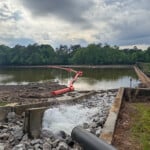
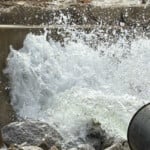


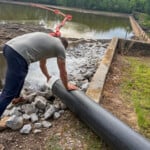




MONROE, N.C. – The City of Monroe activated a newly constructed pipeline Friday, May 1, 2026, beginning the flow of nearly two million gallons of additional water per day into Lake Lee after receiving approval from the North Carolina Department of Environmental Quality’s Division of Water Resources.
The pipeline connects the City of Monroe’s Rock Quarry lake, located adjacent to Quarry Road in Monroe, to Lake Lee, which sits at the center of Monroe’s three-lake drinking water system. Construction began in late March, with crews laying approximately 6,500 linear feet of piping in roughly five weeks. Pumping officially began on May 1.
The quarry, which the City recently acquired, contains an estimated 120 million gallons of water and is expected to naturally recharge through an onsite spring. Water quality was thoroughly tested and reviewed by NCDEQ’s Public Water Supply Section prior to approval, with sampling conducted at multiple depths throughout the water supply.
“This is the result of months of planning and hard work by our water resources team,” said Mayor Robert Burns. “Monroe made the decision to think ahead and act early, and today that investment is paying off for our community. We are in a better position because of it, and we will keep working until this drought is behind us.”
“We identified this quarry as a potential resource and moved quickly to make it a reality,” said City Manager Mark Watson. “From acquisition to state approval to construction, this project came together in four months. The City has an exceptional staff and a City Council willing to act decisively. This action will assist in protecting Monroe’s water supply.”
How Monroe’s Water Works:
Monroe’s water system relies on three City-managed lakes, Lake Monroe, Lake Lee, and Lake Twitty, all of which refill from local rainfall and runoff. Unlike many neighboring communities that draw from rivers or regional water authorities, Monroe’s supply is locally sourced, a distinction that has made the current drought particularly impactful.
Lake Twitty, where Monroe’s drinking water is drawn and treated, has been receiving approximately three million gallons per day pumped from Lake Lee to maintain adequate supply levels. The quarry pipeline adds nearly two million gallons per day to Lake Lee, offsetting that daily demand. Flow from Lake Monroe to Lake Lee has been temporarily paused to give Lake Monroe time to recover with future rainfall while the Quarry source is supplementing our water supply.
Rob Miller, General Manager for Energy and Water Resources, and Jay Voyles, Deputy General Manager, have led the City’s overall drought response strategy, overseeing everything from the decision to pursue the quarry as an emergency supply source to coordinating State approval and construction. Miller said the project reflects the kind of forward planning approach Monroe uses to manage all of our utilities.
“When drought conditions started worsening late last year, we didn’t wait,” Miller said. “We identified the quarry as an opportunity, moved quickly to make it happen, and I’m proud of the team that pulled this together in a matter of weeks. This gives Monroe a meaningful buffer while we continue monitoring conditions and planning for the long term.”
NCDEQ Approval
The NCDEQ approval, issued May 1, authorizes temporary use of the pipeline during the current drought emergency. The system includes an 8-inch diesel engine-driven centrifugal pump rated at 1,500 gallons per minute and approximately 6,500 linear feet of 12-inch above-ground piping. A cascade discharge structure at the Lake Lee shoreline conveys flow through riprap into the lake. The City will report weekly to NCDEQ’s Mooresville Regional Office on hours operated and gallons pumped.
Drought Persists
Jay Voyles, the Deputy Manager of Energy and Water Resources shared that while the Quarry Lake will have an amazing positive impact on the City’s water supply, it doesn’t change the reality that the City of Monroe remains in an extended, historic drought. Last week, the City was upgraded from “Extreme Drought” to “Exceptional Drought” according to drought.gov.
“We’ve looked back at the data,” Voyles said. “Twenty years ago, we were withdrawing approximately six million gallons a day from our reservoirs. Fast forward to now and we’re withdrawing only approximately seven million gallons a day. Even with growth and development, this is really all about the drought. Months and months of sustained lack of precipitation.”
Monroe remains in Stage 1 Water Conservation, which was declared January 28, 2026. Stage 1 is voluntary, with no mandatory restrictions and no rate increases. The City continues to ask all residents and businesses to be mindful of daily water use.
Residents can take the following steps to help:
- Fix leaks and running toilets promptly
- Run dishwashers and laundry only with full loads
- Keep showers brief
- Avoid washing driveways, sidewalks, and vehicles unnecessarily
- Water plants only in the early morning or evening to reduce evaporation
The City is also conducting a Source Water Supply Study through an independent consultant to evaluate Monroe’s long-term water supply assets and identify investments to make the system more drought-resilient. Results of that study will help guide future decisions about the quarry and other potential supply sources.
For current water conservation status and updates, visit monroenc.org/2026drought.
Click here for more from WCCB Charlotte.